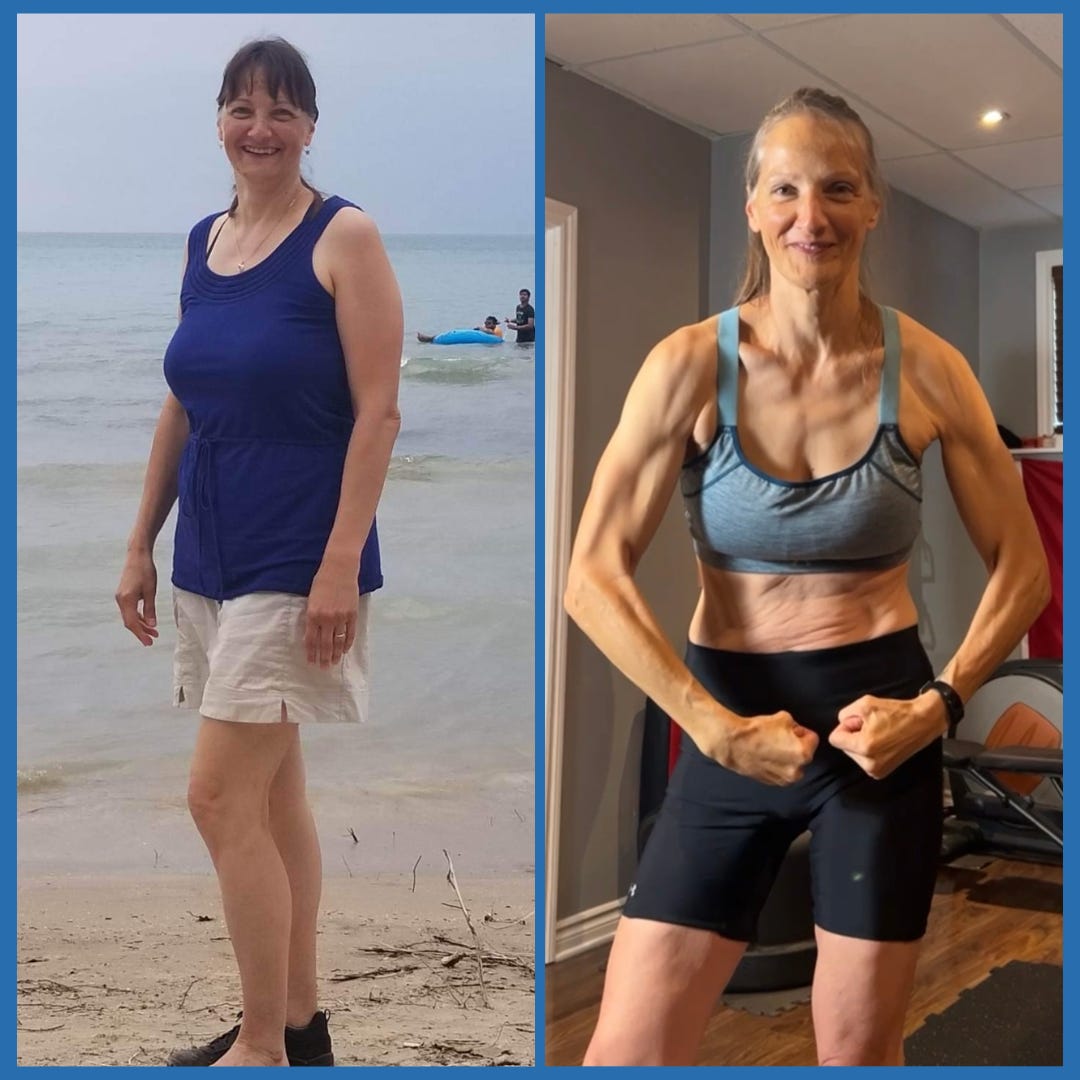
These past 17 weeks, I’ve been doing a body recomposition transformation and it’s been challenging… as it is every time I do it.
I am doing this transformation simply so that I can make a short documentary of it and post it on my YouTube channel.
So far I’ve documented the ups and downs of the journey: the days where I missed workouts, the days where I went over my calories, or ate food that wasn’t the “best” for me.
I’m doing this to show people that you don’t need to be perfect to transform your health and body.
Now I know that some of you may say, “It’s easy for you, Coach Maxime, you are 33 years old.” Well, if you don’t believe the principles work, I’ve done over 63 one-hour long interviews with our members that we’ve helped transform who are between the ages of 45 and 87 years young (check them out here).
Even with that being said, there are plenty of overweight and obese individuals in their 20s, 30s, and 40s to show that it’s not that “easy,” regardless of your age.
So today I want to share one principle that has really helped me throughout ALL my transformations that I’ve done in the past 21 years of working out, and you read that right, I’ve been working out for over two-thirds of my life so far.
Before any hate comment kicks in as to why I’ve had to transform so many times, it’s not because I couldn’t keep the weight off. It’s because I compete in different sports (martial arts, basketball, bodybuilding, powerlifting, high-fashion modeling, Ironman 70.3 races, basketball again, and that last round I let myself get a little more out of shape because I knew I wanted to do this project).
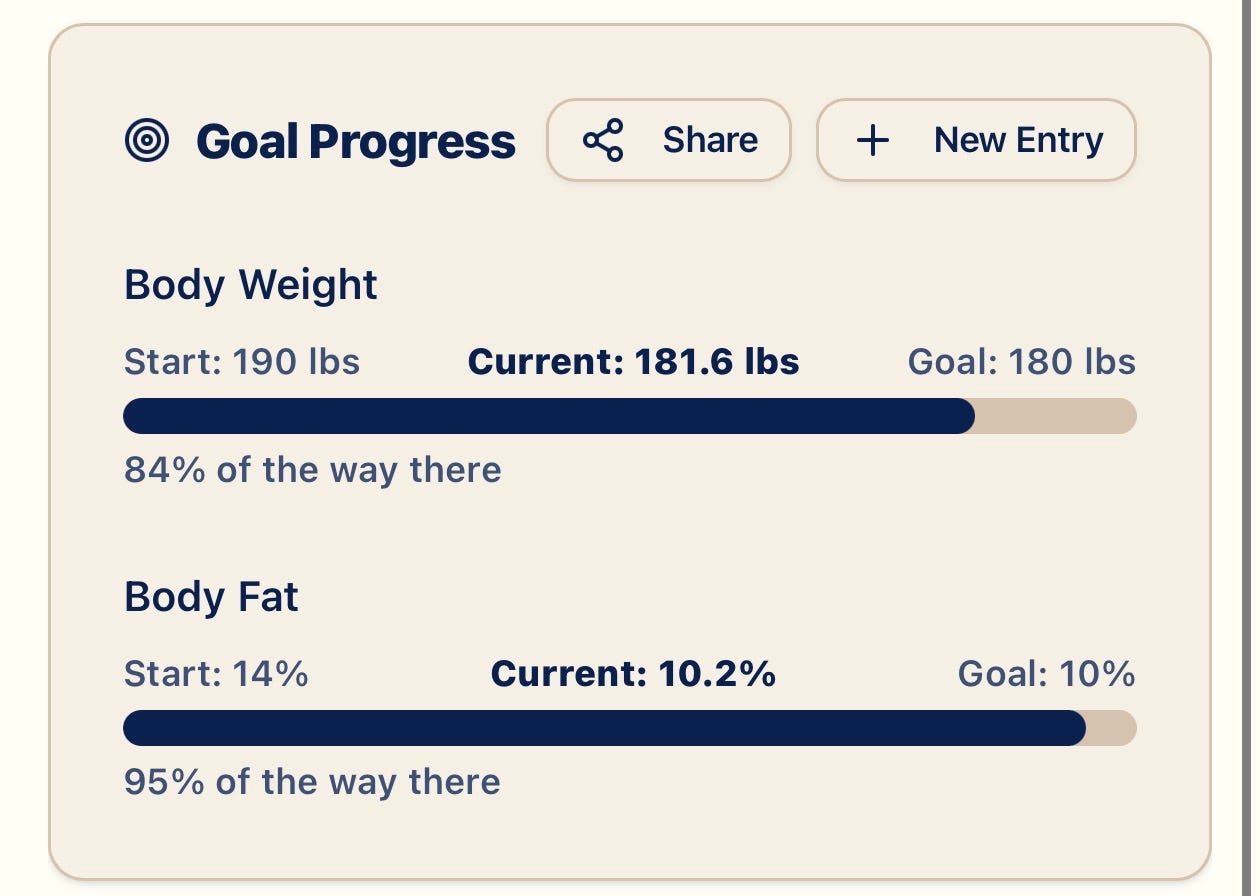
But here is what I’ve been able to produce so far as results, and I’m a few weeks away from being done with the body recomposition phase and then will be transitioning into a reverse dieting phase for four months.
Here is one of the top principles that I think matters the most, that if people could learn to gain mastery over, it would make their whole life, health, fitness, and overall life journey more conducive to reaching their goals, and it’s something that I’ve had to work hard at getting better at.
And to be honest, it’s still and always will be a work in progress.
And that is the ability to sit in the uncomfortability of truly wanting something and not giving it to myself.
And this applies to all areas of life.
You really want to buy something that you know you don’t really need, but you just WANT IT and can’t resist your own desires, and end up buying it, putting you further into debt.
You are in a calorie deficit and you really want to eat a certain food or meal that would put you over your calorie goals for the day, and you just CAN’T RESIST IT, which means you can’t sit with the feeling of wanting it and not giving it to yourself.
The skill of learning to sit with uncomfortability is the most important muscle I believe you can develop in life.
You can call that discipline, but I think it’s deeper than that.
It’s the same muscle that most people have weakened by not being able to sit still and do nothing. Most people have to pull out their phone and distract themselves.
That is one of the many reasons why I like doing these monthly seven-day digital detoxes, because I get to strengthen that muscle. Don’t get me wrong, it’s hard, but the more I do it, the easier it becomes. Just like training a muscle.
Some may consider it deprivation, but it’s not, because it’s for the goal that YOU said you cared about. No one is forcing you to eat healthy, to want to lose fat, or to want to build muscle so that you can live a long, healthy life, free of chronic disease, and so that you can spend more time with the people you love.
No one is telling you to do any of that, so you can eat all the crap you want and not exercise, and deal with the results of those actions.
But my guess, if you are reading my content, is that you want more for your life, for your health, for your fitness, and for your future self.
That, my friends, is a goal that you have set for yourself. SO, if the actions necessary for you to reach the goal that you said you wanted require you to not “give” yourself something when you “really” want it, then that is a choice and is not deprivation.
My view of life is that I am not entitled to anything besides love from my family and my wife. Besides that, if I set a goal for myself, I don’t deserve it unless I am willing to do the actions necessary to get that goal, and if I’m not, then I don’t get the goal. It’s as clear as that.
I find too many people feel entitled to being at a certain weight or body fat because they worked hard for a short period of time, and I consider 6 to 12 months short.
Yes, you can get phenomenal results, as we’ve proven over and over again in our coaching program, but the goal isn’t to be fit for 6 to 12 months, it’s to be fit and healthy for a lifetime, and that requires a long-term commitment on your end. It’s a positive life sentence you are giving yourself.
You get what you work for, you get what you sacrifice for, you get what you commit to in life. My recommendation to you is that if you don’t have the “thing/goal” that you want, it’s probably because you have some behaviors that aren’t conducive to having that goal, and that it will most likely require you to sit with very uncomfortable feelings of “I want” and “I don’t give it to myself.”
Like I said at the start, it’s a work in progress. It isn’t always perfect, but it’s consistent. The only reason I was able to transform, and that our clients are able to transform, is because they showed up far more often than the amount of “mistakes/learning opportunities” they’ve had.
I hope this resonated, because it is the most underworked muscle I see in people that I know would make the world of a difference.
To make this practical, here is how I deal with the sensation of want and not giving into it 98% of the time:
I become aware that it’s there, and I ask myself if it’s a logical desire or an emotional one.
In the context of exercise and fitness, it will 95% of the time be emotional. I then take some big breaths and just sit with it. I observe it. I understand that I won’t die from having cravings for a cookie and not eating it (sounds funny, right? But sometimes it feels like that).
I tell myself, if I really want it, I can have it tomorrow. There’s no emergency to have it now. The next day, if I still want it, then I have it and I simply make it fit within my calories.
It’s important to catch the distinction here: I could have done that on that first day, but then the muscle that would have been strengthened is the one of giving into the emotion of “I want, I have.” By delaying it to the next day, it shifts to “I wanted, and now I consciously choose to have it.”
It shifts from reactive to responsive.
I hope that makes sense.
I hope it helped someone, because I went deep on that one and I didn’t expect it, but I let my heart write it out.
I hope you have a fantastic rest of your week ahead, and I invite you to start working that muscle of “I want, I wait” versus “I want, I take.”
Sincerely,
Maxime
Co-Founder of Mavy Wellness
Ps. Ready to level up like my mom below, book your introductory meeting with our team → https://mavywellness.com/